
Insights
It is not the individual solution that makes the difference, but the system that connects them
People, robots, automated guided vehicles and soon humanoid robots: why automation in custom manufacturing needs a common layer that connects and orchestrates everything.
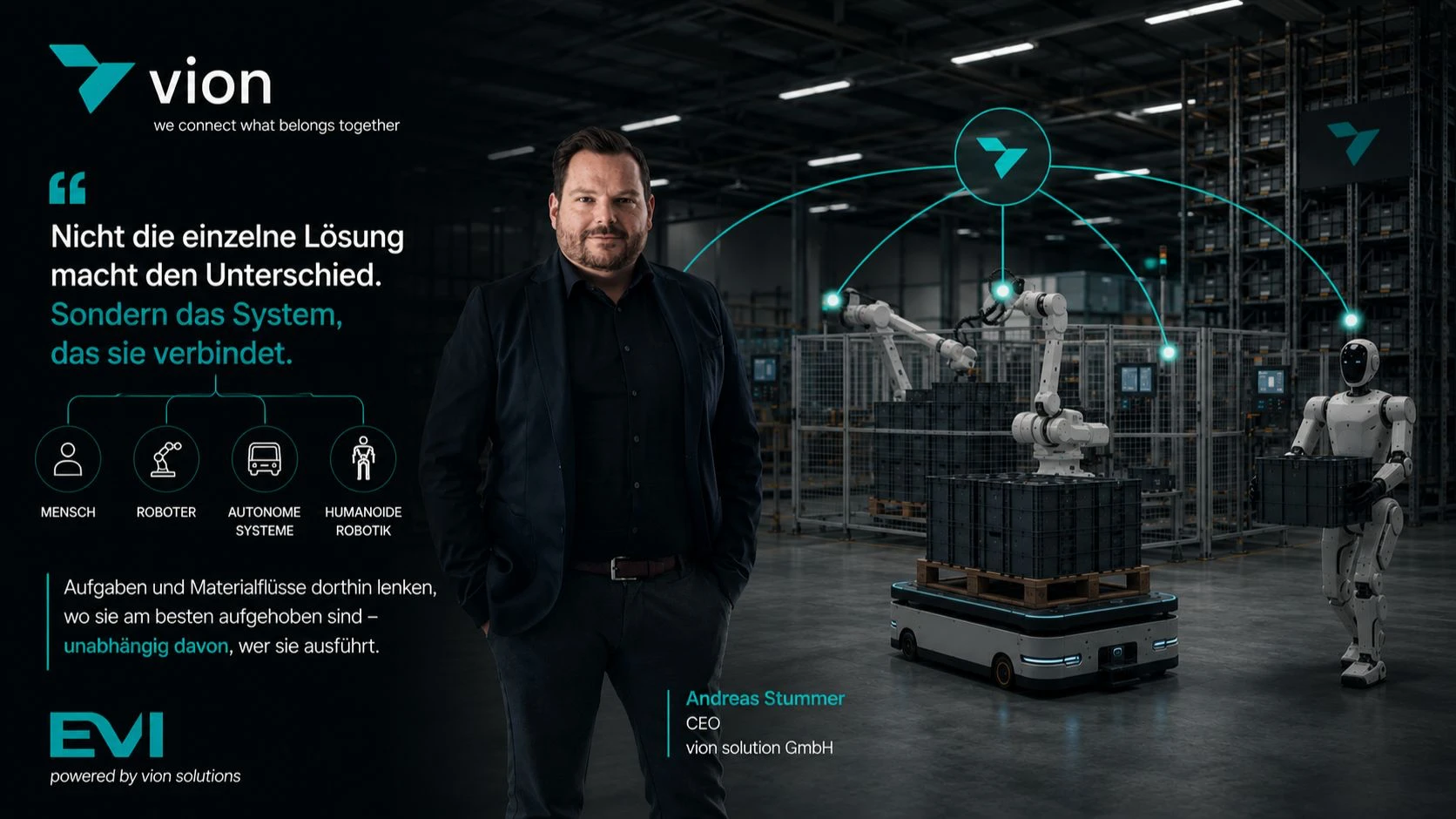
What works in a fully linked, streamlined series production plant, thanks to interlinked equipment and processes, quickly becomes a growth barrier and a showstopper for automation in the world of batch size one and custom manufacturing. A commentary by Andreas Stummer, CEO of vion solutions.
Three disciplines that barely know each other
This is exactly where three disciplines already work side by side today, barely knowing or communicating with each other: the person on the line, the robot in the cell, the automated guided vehicle in between. In most companies, the software that is supposed to hold all this together only does so to a very limited extent.
When people talk about automation, they often mean individual machines and isolated processes. But the real task lies elsewhere. People, robots and autonomous systems do not need separate solutions. They need a common layer that connects and orchestrates everything.
Grown structures, missing data
On top of that, many companies are built on structures that have grown over years: closed systems and machines that deliver the necessary data only with great difficulty, if at all. Yet this data is the foundation for automation to work in the first place.
The next discipline: the humanoid robot
In the coming years, another discipline will emerge: the humanoid robot. It may still sound like a distant future that it will work side by side with people and interact seamlessly with machines and industrial robotics. But exactly this interplay is becoming reality. By then at the latest, it will be clear that isolated point solutions have reached their limits.
A layer that decides
What is needed is a layer that decides who takes on a task: a person, a robot, an automated vehicle or, later, a humanoid unit. This layer is guided by material, order and capacity, not by who is responsible.
That is exactly what we are working on with EVI: routing tasks and material flows to where they are best handled, regardless of who ultimately carries them out.
An end-to-end, orchestrated system
I am convinced that in the future, the difference will not come from the individual automation solution, but from the ability to control people, robotics and autonomous systems as one unit. What is needed is an end-to-end, orchestrated overall system.
We connect what belongs together.
How far is this already a reality in your production, and where does it still fail because of responsibilities between disciplines? Let's exchange ideas.
Book a meeting nowMore posts
View all news
Insights
What actually happens when AI hallucinates on the shop floor?
An AI can get everything right technically and still be wrong operationally. Why AI agents in manufacturing need one thing above all: operational context.
Read more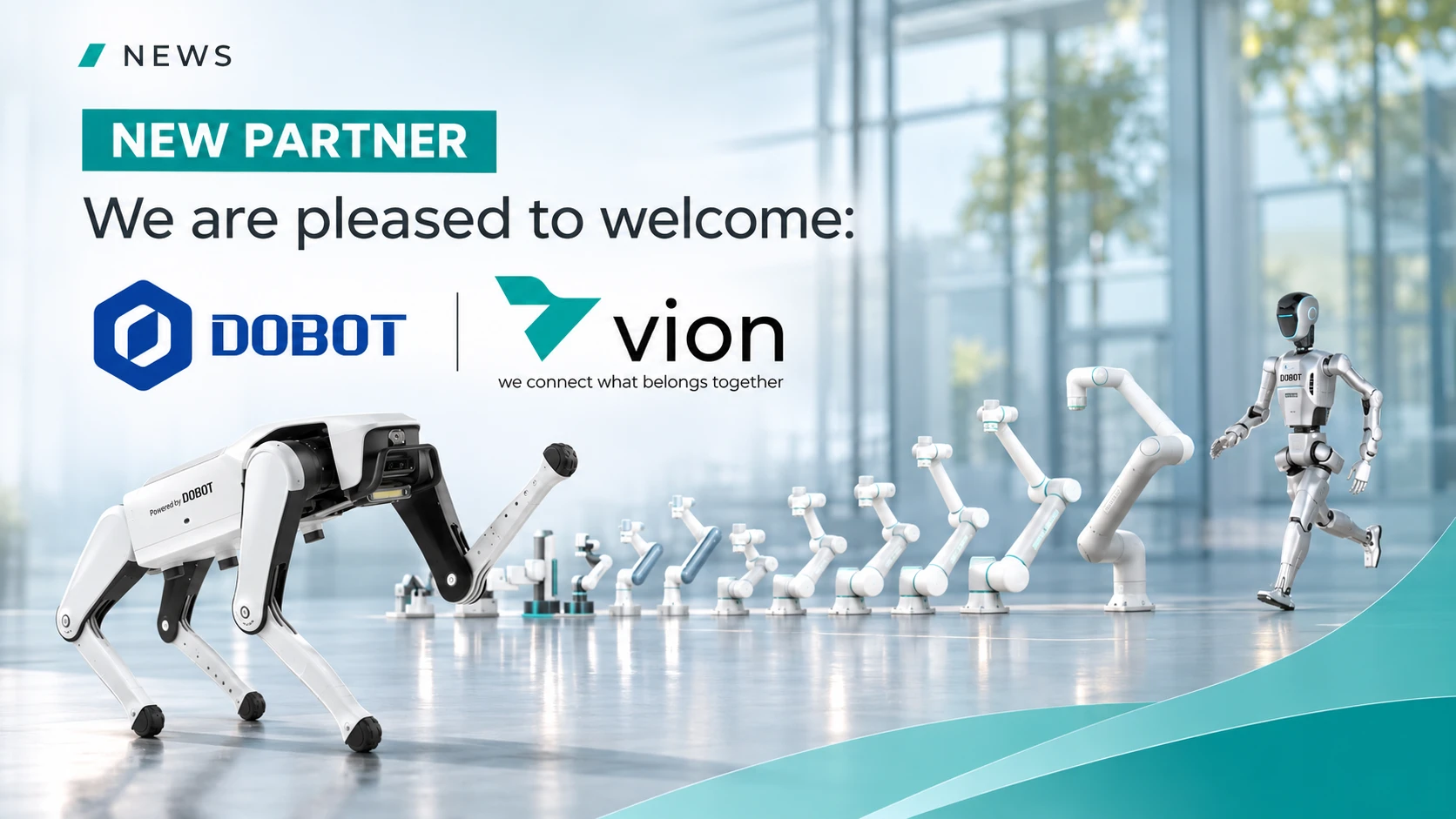
General
New partnership with Dobot Robotics: Rover X1 meets EVI
vion solutions has joined the DOBOT partner network in Austria. Together we are extending the four-legged Rover X1 with LiDAR-based environment perception and autonomous navigation, and connecting it to existing workflows through EVI.
Read more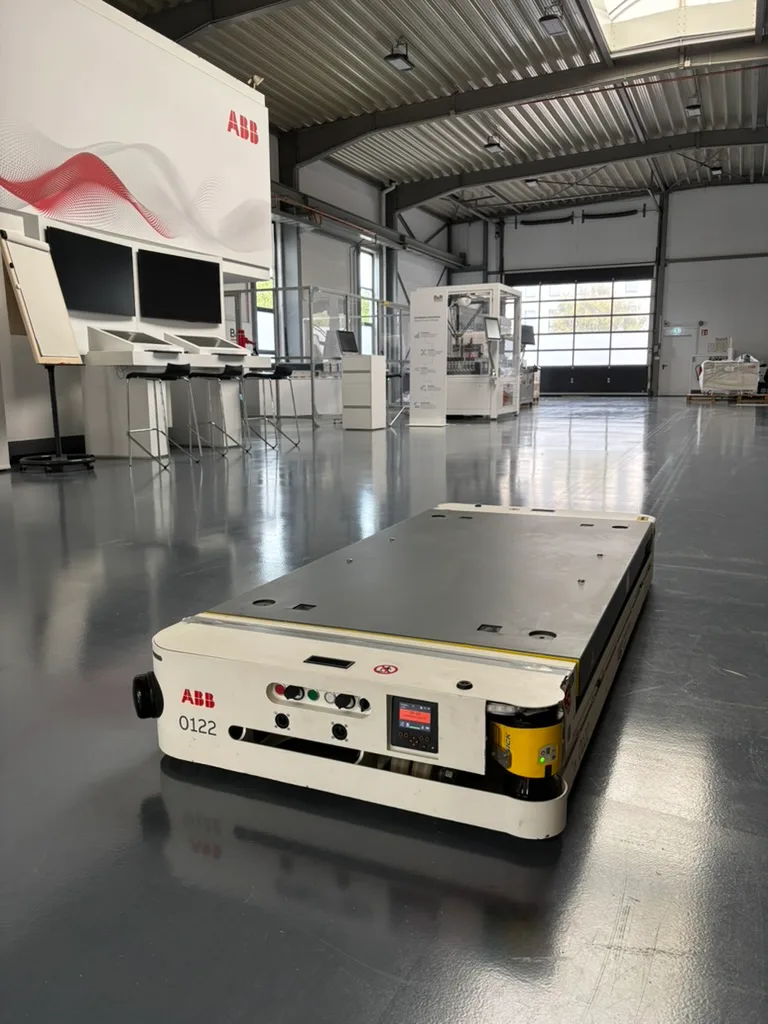
General
Visiting ABB Robotics in Friedberg
A deep dive into AMR technology, software and architecture, and into the question of how autonomous systems can be integrated even more deeply into a continuous production flow.
Read more